Understanding Stroke: Causes, Symptoms, Acute Treatment...
By Dr. Ritwiz Bihari
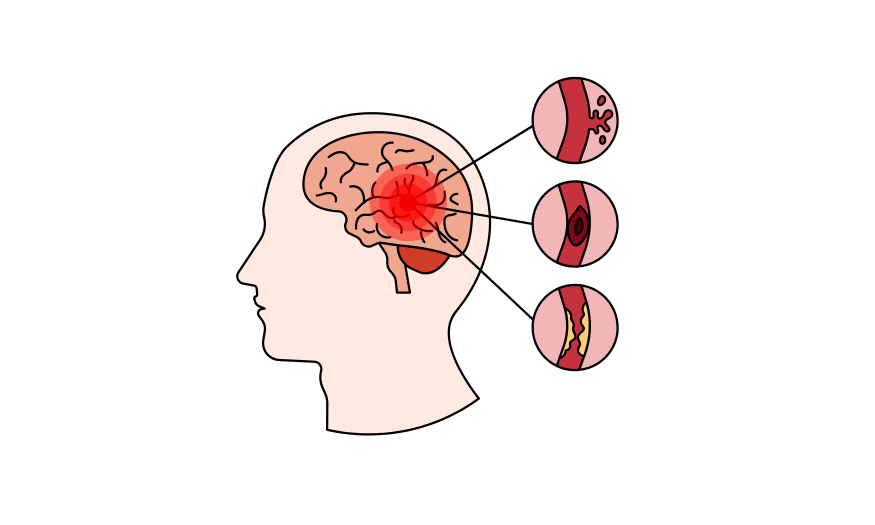
- A stroke occurs when brain tissue is starved of oxygen, either due to a blocked artery (Ischaemic, 80–85%) or a ruptured blood vessel (Haemorrhagic, 15–20%). Both are extreme medical emergencies requiring immediate hospital attention.
- The updated BE-FAST acronym — Balance, Eyes, Face, Arms, Speech, Time — is the most complete tool for recognising stroke warning signs. Even transient symptoms (TIA) require urgent evaluation within 24 hours.
- IV thrombolysis (clot-dissolving medication) must be given within a strict 4.5-hour window. Mechanical thrombectomy can be performed up to 24 hours in selected patients. Time is Brain — every minute of delay costs 1.9 million neurons.
What Is a Stroke? The Basics Every Family Must Know
A stroke occurs when the vital blood supply to a specific part of the brain is suddenly, catastrophically interrupted. Without the continuous flow of oxygen and glucose, highly sensitive brain cells begin to die within minutes. This is not a gradual, insidious process — in a large-vessel ischaemic stroke, approximately 1.9 million neurons are permanently lost every single minute that treatment is delayed. This staggering, terrifying biological fact is exactly why the global neurology community uses the urgent phrase: "Time is Brain."
Stroke is the second leading cause of death and the leading cause of acquired adult disability worldwide. In India alone, well over 1.5 million strokes occur every single year, with the incidence in younger adults (under 50) sharply rising due to unmanaged, lifestyle-related risk factors. Yet, stroke is largely preventable and, when it does occur, highly treatable — but only if it is recognised quickly and managed immediately at a capable medical facility. If you or a family member possess significant stroke risk factors, I strongly encourage you to read about our comprehensive stroke prevention and acute management programme.
The Core Types of Stroke
Understanding the exact type of stroke is absolutely essential because the medical treatments differ fundamentally—and giving the wrong treatment can be fatal:
1. Ischaemic Stroke (80–85% of all strokes)
This occurs when a physical blood clot completely blocks an artery supplying the brain. The clot may form locally within the brain's artery (thrombosis) due to severe atherosclerosis (plaque buildup) — the exact same pathological process that causes heart attacks. Alternatively, the clot may travel from elsewhere in the body (an embolism), most commonly from the heart in patients suffering from an irregular heartbeat known as atrial fibrillation (AFib). This specific type of stroke is highly amenable to clot-dissolving therapy (thrombolysis) and, in selected advanced cases, mechanical clot removal (thrombectomy).
2. Haemorrhagic Stroke (15–20% of all strokes)
This occurs when a weakened blood vessel in or around the brain physically ruptures, causing blood to leak directly into the delicate brain tissue (intracerebral haemorrhage) or into the tight space between the brain and its protective covering (subarachnoid haemorrhage). Chronically uncontrolled high blood pressure is the single biggest cause of intracerebral haemorrhage. Treatment focuses entirely on aggressively controlling bleeding, drastically reducing life-threatening brain swelling (edema), and in some severe cases, immediate neurosurgical intervention.
3. Transient Ischaemic Attack (TIA) — The "Warning Stroke"
A TIA produces identical, terrifying stroke symptoms — severe weakness, speech difficulty, sudden vision changes — but resolves completely on its own, usually within a few minutes to an hour. Patients often dismiss this as "just a funny spell" or assume "nothing happened because I feel fine now." This is a dangerous, potentially fatal mistake. A TIA is a blaring neurological alarm bell; it is a medical emergency. The risk of suffering a massive, debilitating stroke within 48 hours of a TIA is between 5–10%. Every single TIA patient must be evaluated urgently, because aggressive treatment started in that brief window can completely prevent the full stroke.
Risk Factors for Stroke — What You Can Control
The vast majority of stroke risk is highly modifiable. The most critical risk factors include:
- Hypertension (High Blood Pressure): The single most powerful modifiable risk factor. Chronic elevated BP silently damages the walls of blood vessels in the brain over years, making them highly prone to either blockage or sudden rupture. Target BP: strictly below 130/80 mmHg. Consistent daily medication and home monitoring are non-negotiable.
- Atrial Fibrillation (AF): An irregular, chaotic heart rhythm that causes blood to pool in the heart's chambers and form massive clots, which can then forcefully embolise to the brain. AFib increases stroke risk by an astonishing 5-fold. Prescription anticoagulation therapy (blood thinners) dramatically reduces this risk.
- Diabetes Mellitus: Rapidly accelerates atherosclerosis (hardening and narrowing of the arteries) and is associated with a 2–4 times higher stroke risk. Strict blood sugar control is highly protective for the brain.
- High LDL Cholesterol: Contributes massively to atherosclerotic plaque formation in the carotid arteries (in the neck) and intracranial vessels. High-dose statin therapy is a cornerstone of secondary stroke prevention.
- Smoking: Directly damages blood vessels and doubles the risk of ischaemic stroke. The risk begins to normalise significantly within a few years of quitting entirely.
- Physical Inactivity and Obesity: These deeply cluster with hypertension, diabetes, and hyperlipidaemia — creating a perfect storm of severe cardiovascular risk.
Recognising a Stroke: The BE-FAST Acronym
The updated BE-FAST acronym — which I aggressively use in my clinical practice and public awareness efforts — adds two critical warning signs that the older FAST framework dangerously missed:
- B — Balance: Sudden, unexplained loss of balance, total loss of physical coordination, or severe, room-spinning dizziness.
- E — Eyes: Sudden, painless vision changes or loss of vision in one or both eyes, or sudden, severe double vision.
- F — Face: One side of the face visibly droops. Ask the person to smile — is the smile uneven or paralyzed on one side?
- A — Arms: One arm (or leg) drifts down, feels heavy, or cannot be lifted when both are held out in front.
- S — Speech: Slurred, "thick," confused, or totally impossible to understand speech. The patient may also be unable to understand what you are saying to them (aphasia).
- T — Time: Call emergency services immediately. Note the exact time symptoms began. Do not wait to see if they improve.
Even if the symptoms seem relatively mild or resolve spontaneously while you are watching, call for emergency help. Many patients arrive at the hospital too late because they mistakenly waited to see if it would pass. It may have been a TIA — and the full, devastating stroke may be only hours away.
Acute Treatment: Why the First Hours Are Everything
The Emergency Room: Door-to-Needle Time
When a suspected stroke patient arrives at the ER, the immediate priority is a rapid, non-contrast CT scan of the head. This scan is not primarily to see the stroke itself (which may not show up for hours), but to absolutely rule out a haemorrhage (bleeding). If there is blood in the brain, blood thinners will kill the patient. If the scan is clear of blood, the diagnosis is an ischaemic stroke, and the clock is ticking for "door-to-needle" time.
IV Thrombolysis (Clot-Busting Therapy)
For ischaemic strokes, powerful IV medications like alteplase (tPA) or tenecteplase can chemically dissolve the clot and restore blood flow. However, the treatment window is extremely narrow: strictly within 4.5 hours of symptom onset — and the earlier within that window, the exponentially better the outcome. This is why knowing exactly when the symptoms began is the most critical piece of information for the treating neurology team.
Mechanical Thrombectomy
For massive, large-vessel blockages, a catheter can be expertly navigated through the arteries from the groin or wrist all the way into the brain to physically snare and remove the clot. In carefully selected patients (proven by advanced perfusion imaging), this can be performed up to 24 hours after onset. This miraculous procedure has transformed outcomes for severe strokes — patients who might previously have been left with complete, lifelong paralysis are now walking out of the hospital days later.
Stroke Rehabilitation and Long-Term Recovery
After the acute hospital phase, intensive rehabilitation is crucial. The brain has a remarkable, scientifically proven capacity for functional reorganisation — called neuroplasticity — and intensive, early rehabilitation exploits this critical biological window. The multidisciplinary rehabilitation team typically involves:
- Physiotherapy: To ruthlessly regain strength, balance, and coordination in affected, weakened limbs.
- Occupational Therapy: To relearn vital daily tasks — dressing, eating, writing — adapting them to the patient's current physical abilities.
- Speech and Language Therapy: For severe aphasia (language and communication difficulties) and dysphagia (swallowing problems), both incredibly common after a stroke.
Furthermore, we must not ignore the emotional impact. Post-stroke depression affects up to 30% of survivors and severely hinders physical recovery. Additionally, some patients experience Pseudobulbar Affect (PBA), characterized by uncontrollable laughing or crying that doesn't match their actual mood. These are neurological symptoms that require medical treatment, not just "cheering up."
Recovery is not linear and does not have a fixed endpoint. I have seen dedicated patients continue to make highly meaningful gains 12, 18, and even 24 months post-stroke with consistent, grueling rehabilitation.
Prevent the Unthinkable: Stroke Screening
Stroke is one of the most devastating events a family can experience — but it is not inevitable. With awareness of the BE-FAST warning signs, rapid access to emergency care, and aggressive secondary prevention, outcomes are dramatically better today than ever before. If you have concerns about your personal stroke risk, or the risk of a loved one, I strongly encourage you to book a preventive neurology consultation before an emergency occurs.
Dr. Ritwiz Bihari
Head and Chairperson, Neurology
Chandan Hospital, Lucknow