Stroke vs. Heart Attack: How to Tell the Difference and...
By Dr. Ritwiz Bihari
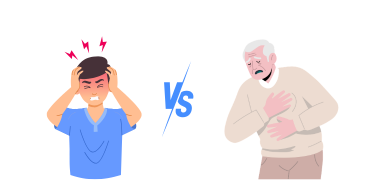
- While both are vascular emergencies caused by blocked or burst blood vessels, a heart attack damages the heart muscle, whereas a stroke destroys brain tissue.
- A stroke is characterized by a sudden loss of neurological function (often assessed via the B.E.F.A.S.T. method), while heart attacks predominantly present with severe chest pain and shortness of breath.
- Both require immediate hospitalization in specialized units; for a stroke, reaching a neurologist within the 4.5-hour 'golden window' is critical for administering clot-busting medication to reverse paralysis.
In the realm of medical emergencies, few words invoke as much fear as "stroke" and "heart attack." Both are sudden, life-threatening events that strike with little to no warning. Both are caused by problems within the body's vascular (blood vessel) system. And for both, immediate emergency medical intervention is the absolute difference between life, death, and permanent disability.
However, despite these similarities, a stroke and a heart attack are fundamentally different medical events that affect entirely different, vital organs. The symptoms they produce are completely distinct, and the specialist required to treat them—a neurologist versus a cardiologist—is different. As a stroke specialist, I frequently encounter patients and families who confuse the two. Understanding the distinction is not just academic; it is knowledge that can save your life or the life of someone you love.
The Core Similarity: A Plumbing Problem
At their most basic level, both a heart attack and the most common type of stroke are "plumbing problems." Your body relies on a vast network of arteries to deliver oxygen-rich blood to your organs. If an artery becomes blocked by a blood clot or plaque buildup, the organ it supplies is instantly starved of oxygen. Without oxygen, tissue begins to die rapidly. The difference between the two conditions lies entirely in where that blockage occurs.
What is a Heart Attack (Myocardial Infarction)?
A heart attack occurs when the blood flow to a part of the heart muscle itself is severely reduced or completely blocked. This is usually caused by the rupture of a cholesterol plaque in a coronary artery, which leads to the formation of a blood clot. As the heart muscle is starved of oxygen, it begins to die, leading to severe pain and potentially causing the heart to stop beating effectively.
Recognizing a Heart Attack
The symptoms of a heart attack are primarily related to the chest and the cardiovascular system:
- Severe Chest Pain or Pressure: Often described as a crushing feeling, an elephant sitting on the chest, or severe tightness. This usually occurs in the center or left side of the chest and lasts for more than a few minutes.
- Radiating Pain: The discomfort frequently spreads beyond the chest, radiating to the left arm (or both arms), the back, the neck, or the jaw.
- Shortness of Breath: Often accompanying the chest pain, but it can also occur before the chest discomfort begins.
- Cold Sweats, Nausea, and Lightheadedness: Breaking out in a sudden cold sweat or feeling severely nauseous or dizzy.
Note: Women sometimes experience atypical heart attack symptoms, such as severe fatigue, indigestion, or pain primarily in the back or jaw, without the classic crushing chest pain.
What is a Brain Stroke (Brain Attack)?
A stroke, often aptly called a "brain attack," happens when blood flow to a specific part of the brain is cut off. This can happen in two ways:
- Ischemic Stroke (Blockage): Like a heart attack, this occurs when a blood clot blocks an artery supplying the brain. This accounts for about 85% of all strokes.
- Hemorrhagic Stroke (Bleeding): This occurs when a weakened blood vessel in the brain ruptures and bleeds into the surrounding brain tissue, putting immense pressure on the brain.
Unlike the heart, the brain controls our ability to move, speak, see, and think. Therefore, when brain cells begin to die from a lack of oxygen (which happens within minutes), the symptoms manifest as a sudden loss of these neurological functions.
Recognizing a Stroke: Think B.E.F.A.S.T.
Stroke symptoms are usually painless and sudden. The most effective way to recognize a stroke is to memorize the B.E.F.A.S.T. acronym:
- B - Balance: Does the person have a sudden loss of balance, coordination, or are they unable to walk straight?
- E - Eyes: Has the person suddenly lost vision in one or both eyes, or are they experiencing sudden double vision?
- F - Face: Ask the person to smile. Does one side of their face droop or look uneven? Is it numb?
- A - Arms: Ask the person to raise both arms. Does one arm drift downward? Is one arm or leg suddenly weak or paralyzed?
- S - Speech: Ask the person to repeat a simple phrase. Is their speech slurred, strange, or impossible to understand? Can they understand what you are saying?
- T - Time: If you observe ANY of these signs, it is time to call an ambulance immediately. Note the exact time the symptoms first appeared.
In addition to B.E.F.A.S.T. signs, a sudden, incredibly severe headache (often described as "the worst headache of my life") with no known cause can be a sign of a hemorrhagic stroke.
The Treatment Pathways: Why the Difference Matters
Because the affected organs are different, the medical specialists and treatments required are completely different.
Treating a Heart Attack: A patient suffering a heart attack needs a Cardiologist. Treatment often involves medications to thin the blood and, crucially, procedures like angioplasty and stenting, where a tiny balloon and wire mesh tube are inserted into the coronary artery to physically open the blockage and restore blood flow to the heart.
Treating a Stroke: A stroke patient requires immediate evaluation by a Neurologist in a hospital equipped with advanced brain imaging (CT or MRI). For an ischemic stroke, the gold standard of treatment is a medication called tPA (tissue plasminogen activator) or Tenecteplase. This powerful "clot-busting" drug can dissolve the clot and restore blood flow to the brain, potentially reversing paralysis and preventing permanent brain damage.
The Critical "Golden Window" for Stroke
In the neurology world, we have a saying: "Time is Brain." Every minute a stroke goes untreated, nearly 2 million brain cells die. Crucially, the clot-busting medication used for strokes is most effective—and safest—when given within a very narrow timeframe, known as the "golden window." This window is typically 4.5 hours from the exact moment the symptoms started.
If you wait to see if the symptoms will go away, or if you drive to a small clinic rather than a major hospital equipped to handle strokes, you may miss this critical window, resulting in permanent disability.
Prevention: Protecting Both Your Heart and Brain
The best news is that up to 80% of both strokes and heart attacks are preventable. Because they share the same underlying cause (damaged blood vessels), they share the exact same risk factors. You can protect both your heart and your brain by managing these key areas:
- Control High Blood Pressure: Hypertension is the single biggest risk factor for stroke.
- Manage Diabetes and Cholesterol: High blood sugar and high LDL cholesterol damage your arteries over time.
- Quit Smoking: Smoking thickens the blood and dramatically increases the risk of plaque buildup.
- Stay Active and Eat Well: A diet rich in fruits, vegetables, and lean proteins, combined with regular cardiovascular exercise, keeps your vascular system healthy.
Don't Wait for an Emergency to Assess Your Risk
If you have high blood pressure, diabetes, or a family history of vascular disease, proactive screening is essential. Book a comprehensive neurological and stroke risk assessment with Dr. Ritwiz Bihari today to protect your long-term health and independence.
Dr. Ritwiz Bihari
Head and Chairperson, Neurology
Chandan Hospital, Lucknow