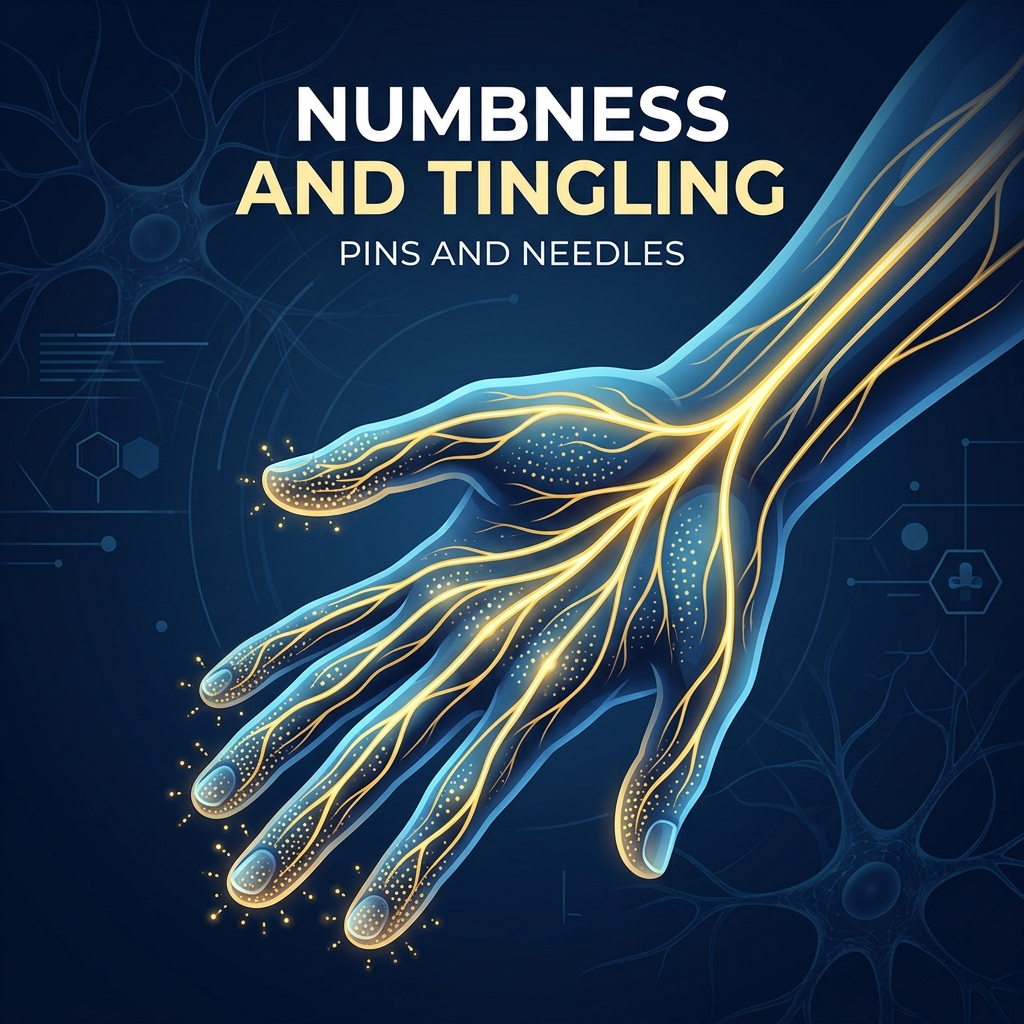
Numbness and Tingling (Pins and Needles): When Should...
By Dr. Ritwiz Bihari
- While a temporary 'sleeping limb' is a completely normal physiological response to pressure, chronic pins and needles strongly indicate long-term nerve compression, irritation, or severe damage.
- Highly common causes include diabetic peripheral neuropathy, severe Vitamin B12 deficiency, Carpal Tunnel Syndrome, and pinched spinal nerves like Sciatica.
- Sudden, unilateral numbness or weakness is a massive, life-threatening red flag for an acute stroke and requires immediate, emergency evaluation.
We have all experienced it: you sit cross-legged on the floor for entirely too long, or you wake up from a deep, heavy sleep having rested awkwardly on your arm. The affected limb feels completely heavy, utterly numb, and is very quickly followed by a deeply uncomfortable, sometimes painful "pins and needles" sensation as the blood flow rapidly returns to the starved nerves. This temporary, totally reversible phenomenon is completely normal and harmless.
However, as a dedicated neurologist, I frequently see highly anxious patients who experience this deeply unsettling sensation chronically, daily, and entirely without any obvious physical pressure on their limbs. When numbness and tingling become persistent, highly frequent, or are accompanied by other worrying symptoms, they are absolutely no longer just a harmless nuisance. They act as blaring warning sirens from your nervous system, forcefully indicating that a nerve is actively being irritated, physically compressed, or permanently damaged.
The Most Common Neurological Causes of Numbness and Tingling
Chronic tingling (medically known as paresthesia) can stem from a wide variety of different neurological conditions. The exact location, timing, and specific nature of the sensation help a trained neurologist precisely pinpoint the underlying anatomical cause:
1. Peripheral Neuropathy (Nerve Damage)
This is undeniably one of the most common causes of chronic numbness and intense tingling, almost always starting at the very tips of the toes and feet before slowly, relentlessly progressing upward into the legs (often clinically described as a "stocking-glove" distribution, as it eventually affects the hands similarly). Peripheral neuropathy implies severe, ongoing damage to the delicate peripheral nerves. It is most frequently caused by poorly controlled diabetes, where high blood sugar slowly destroys the microscopic blood vessels feeding the nerves.
However, diabetes is not the only culprit. Other highly common causes include severe Vitamin B12 deficiency (especially common in strict vegetarians), severe thyroid issues (hypothyroidism), chronic alcoholism, and autoimmune diseases. Proper neuropathy treatment is essential to stop the progression before the numbness becomes totally permanent.
2. Pinched Nerves (Radiculopathy & Sciatica)
If you have a herniated disc, a bulging disc, or severe bone-spur arthritis in your spine, it can physically compress and crush the delicate nerves branching out from your main spinal cord. For example:
- Cervical Radiculopathy: A pinched nerve in your upper neck can cause sharp, electrical pain, intense numbness, and tingling to violently shoot down your shoulder, arm, and directly into specific fingers.
- Sciatica (Lumbar Radiculopathy): A pinched nerve in your lower back can cause these exact same debilitating sensations to radiate deeply down your buttock, back of the thigh, and straight into your lower leg and foot. If you suffer from this, you should consult an expert in neck and back pain.
3. Carpal and Cubital Tunnel Syndromes (Compression Neuropathies)
If you primarily feel burning numbness and tingling heavily in your thumb, index, and middle fingers—especially waking you up in the middle of the night—you are likely dealing with Carpal Tunnel Syndrome. This occurs when the median nerve is severely compressed as it passes through a very narrow, crowded passage of bones and ligaments in your wrist. It is highly common in people who perform highly repetitive hand motions, like heavy typing or assembly line work.
Conversely, if the numbness is strictly isolated to your pinky finger and the ring finger, you likely have Cubital Tunnel Syndrome, which is the severe compression of the ulnar nerve exactly at the inside of the elbow (your "funny bone").
4. Multiple Sclerosis (MS)
Profound, unexplained numbness or intense tingling is very often one of the very first, terrifying symptoms of Multiple Sclerosis. MS is an autoimmune disease where the body's confused immune system actively attacks and destroys the protective, fatty covering of the nerves (myelin) inside the brain and spinal cord. The heavy numbness caused by MS can occur absolutely anywhere in the body and is often severe enough to drastically affect your ability to safely walk, drive, or use your hands effectively.
Massive Red Flags: When Should You Seek Immediate Emergency Medical Attention?
While the vast majority of causes of numbness are chronic and require a scheduled, thorough clinical evaluation, certain specific symptoms demand immediate, life-saving emergency care, as they could strongly indicate a catastrophic event like an acute brain stroke. Seek emergency hospital help immediately if you experience numbness or tingling strongly accompanied by absolutely any of the following red flags:
- Sudden, Explosive Onset: Numbness that appears completely out of the blue within seconds, especially if it is strictly on only one single side of your face, arm, or leg.
- Sudden Weakness or Paralysis: You are suddenly, completely unable to lift your arm, move your leg, or part of your face aggressively droops.
- Severe Speech Difficulties: Sudden slurred speech (dysarthria), deep confusion, or a total inability to find the right common words to express yourself (aphasia).
- Sudden Vision Changes: Sudden, severe blurry vision, double vision, or a total loss of sight in one eye like a curtain coming down.
- Severe, Unexplained Loss of Balance: Sudden, violent dizziness, severe stumbling, or a total inability to walk or stand up.
If any of these occur, you must seek a stroke specialist or an emergency room immediately. Time is brain.
How a Neurologist Accurately Diagnoses the Cause
You must never simply ignore persistent, annoying tingling. When you visit a dedicated neurology clinic, we perform a highly comprehensive, meticulous evaluation to find the exact anatomical root cause. This typically includes:
- Detailed Medical History & Neurological Physical Exam: Precisely testing your deep tendon reflexes, mapping your muscle strength, and meticulously mapping your ability to feel different, subtle sensations (like light temperature, pinprick, or a tuning fork's vibration).
- Nerve Conduction Studies (NCS) & Electromyography (EMG): These are the gold-standard tests. They use tiny electrical impulses to precisely measure the electrical activity and speed in your specific nerves and muscles, helping us determine exactly where, and how severely, a nerve is physically damaged or compressed.
- Advanced Imaging (MRI/CT): To clearly look for herniated spinal discs, dangerous tumors, or glowing signs of MS plaques deep in the brain and spinal cord.
- Comprehensive Blood Tests: To definitively rule out hidden diabetes, severe Vitamin B12 or Vitamin D deficiencies, thyroid dysfunction, or obscure autoimmune markers.
Conclusion and Next Steps
A limb briefly "falling asleep" is a completely normal, physiological part of life. But when numbness, severe tingling, burning, or "pins and needles" become a frequent, highly painful, or steadily worsening part of your daily routine, it is your body's desperate way of actively asking for professional medical help. Early, accurate diagnosis is the absolute key.
Conditions like diabetic neuropathy or carpal tunnel syndrome are highly manageable and highly treatable when caught early, but completely ignoring them can easily lead to devastating, irreversible nerve death and permanent loss of function. If you have any ongoing concerns about numbness, absolutely do not wait for it to become permanent—schedule a comprehensive consultation with a specialist today.
Don't Ignore Nerve Pain
Persistent numbness is not normal. Accurate diagnosis is the undeniable key to effective treatment. Book a comprehensive consultation with Dr. Ritwiz Bihari today for a thorough, expert neurological evaluation.
Dr. Ritwiz Bihari
Head and Chairperson, Neurology
Chandan Hospital, Lucknow