Understanding Movement Disorders: A Deep Dive into...
By Dr. Ritwiz Bihari
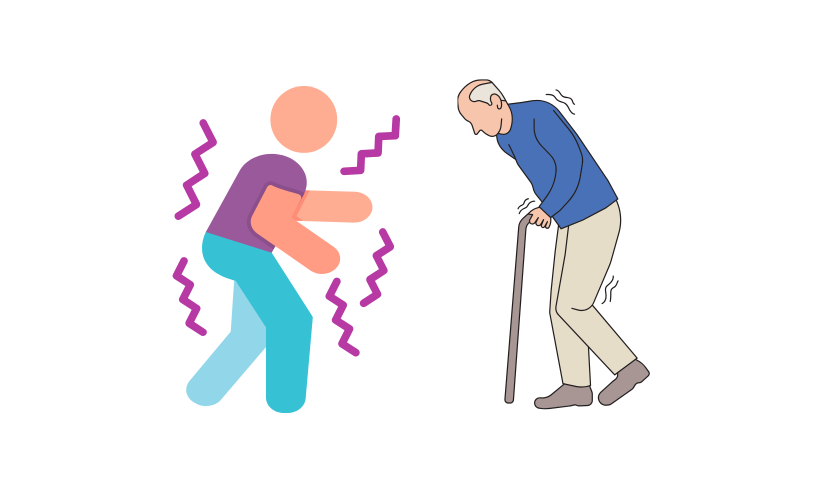
- Movement disorders stem from complex dysfunction in the basal ganglia's direct and indirect pathways, causing either an excess of involuntary movement (hyperkinesia) or a debilitating lack of intentional movement (hypokinesia).
- Parkinson's disease is clinically diagnosed by the classic 'TRAP' motor symptoms (Tremor, Rigidity, Akinesia, Postural instability) alongside hidden non-motor symptoms, driven by a progressive loss of dopamine.
- While these conditions are currently incurable, modern neurology utilizes highly targeted therapies—including dopamine replacement, Botox injections for dystonic spasms, and Deep Brain Stimulation (DBS)—to offer profound, life-changing symptom relief.
Every single intentional movement we make—whether it is the delicate act of writing a letter, the coordinated balance required to walk across a room, or simply blinking our eyes—requires an incredibly complex, highly synchronized symphony of electrical signals in the brain. The primary conductor of this intricate motor symphony is a collection of nuclei deep within the brain called the basal ganglia.
The basal ganglia function like the brain's braking and accelerating system for movement. When this region is damaged, degenerates, or experiences chemical imbalances, the resulting "misfires" lead to what neurologists classify as Movement Disorders.
Broadly speaking, Movement Disorders fall into two major categories: Hyperkinetic disorders, which cause an excess of involuntary movement (such as tremors, spasms, or jerking), and Hypokinetic disorders, which cause a lack of intentional movement (such as debilitating stiffness and slowness). As a neurologist specializing in Parkinson's Disease and Movement Disorders, my goal is to demystify these complex conditions and highlight the advanced, targeted treatments that are helping patients reclaim their mobility, dignity, and independence.
1. Parkinson's Disease: The Dopamine Deficit
Parkinson's disease is the most widely recognized hypokinetic movement disorder. It is a progressive neurodegenerative condition caused by the gradual death of highly specialized nerve cells in the substantia nigra, a specific, darkly pigmented area of the basal ganglia. These vital cells are responsible for producing dopamine, a crucial chemical messenger (neurotransmitter) that ensures smooth, purposeful, and coordinated muscle movements. As dopamine levels drop significantly (usually by the time 60-80% of the cells are lost), the brain's motor control circuitry begins to break down.
The Classic "TRAP" Motor Symptoms
Neurologists rely on careful clinical examination to diagnose Parkinson's, looking for the classic "TRAP" signs:
- T - Tremor: A "resting tremor" is often the very first symptom noticed by the patient or their family, typically starting in the fingers or thumb of one hand (often described as a "pill-rolling" tremor). Crucially, it occurs when the limb is completely relaxed and supported, and it often temporarily disappears when the person actively uses that hand.
- R - Rigidity: Severe muscle stiffness that limits the joint's range of motion. During an exam, a neurologist may feel a "cogwheel" rigidity—a jerky, ratchety resistance when moving the patient's arm. This rigidity causes severe, aching muscle pain.
- A - Akinesia / Bradykinesia: This is the absolute defining feature of Parkinson's, meaning "slowness of movement." Simple, automated tasks, like buttoning a shirt, tying shoelaces, or getting out of a deep chair, become incredibly difficult, conscious, and time-consuming. The patient's walking steps become short and shuffling, and their facial expressions may become masked or blank (hypomimia).
- P - Postural Instability: Impaired balance and coordination, leading to a forward-stooped posture and a dangerously high risk of falls. This typically occurs in the later stages of the disease.
The Hidden Burden: Non-Motor Symptoms
Parkinson's is not just a movement disease; it affects the entire nervous system. Years or even decades before the visible tremors start, patients often experience non-motor symptoms. These early warning signs include a profound loss of the sense of smell (anosmia), severe chronic constipation, unexplained depression or anxiety, and REM Sleep Behavior Disorder (a condition where patients violently act out their vivid dreams by thrashing, kicking, or shouting in their sleep).
2. Essential Tremor (ET): The Action Tremor
Essential Tremor is actually the most common movement disorder in the world, significantly more prevalent than Parkinson's, though the two are frequently confused by the general public. Unlike the "resting tremor" of Parkinson's, ET is a hyperkinetic action tremor. This means the hands shake wildly when the person is actively trying to use them against gravity—for example, while bringing a cup of tea to their mouth, eating soup with a spoon, or trying to write legibly. ET is highly genetic (often running in families) and can also affect the head (causing a "yes-yes" or "no-no" nodding motion) and the vocal cords, causing a shaky voice. Interestingly, patients often report that drinking a small amount of alcohol temporarily suppresses the tremor, which is a classic clinical clue for ET.
3. Dystonia: The Battle of the Muscles
Dystonia is a deeply frustrating disorder that occurs when the brain sends incorrect, simultaneous signals causing opposing muscles to contract at the same time. This results in painful, involuntary twisting movements or completely abnormal, frozen postures. Dystonia can affect the whole body (generalized), or it can be focal (affecting just one specific area).
- Cervical Dystonia (Spasmodic Torticollis): The neck muscles contract involuntarily, causing the head to twist, tilt, or pull to one side painfully. Patients sometimes use a "sensory trick" (geste antagoniste), like gently touching their chin, which bizarrely but effectively tells the brain to temporarily release the spasm.
- Blepharospasm: Involuntary, forceful blinking or severe spasms of the eyelids. It can become so severe that the eyelids clamp tightly shut, rendering a person functionally blind, even though their eyes and optic nerves are perfectly healthy.
- Writer's Cramp (Task-Specific Dystonia): The hand and forearm muscles cramp and spasm painfully only when the person attempts to write with a pen. If they stop writing and use a keyboard, or use a knife and fork, the hand functions perfectly normally.
4. Restless Legs Syndrome (RLS)
RLS is a neurological sensorimotor disorder characterized by an overwhelming, irresistible urge to move the legs, usually accompanied by deeply uncomfortable "crawling," "creeping," or "pulling" sensations deep within the calves or thighs. These symptoms almost exclusively occur in the evening or at night when the person is resting or trying to sleep, leading to severe chronic insomnia. Moving the legs provides immediate, but temporary, relief.
Advanced Treatments: Reclaiming Control
While the majority of movement disorders are chronic and currently incurable, modern neurology has developed highly effective, sophisticated ways to manage the symptoms, modify the disease impact, and dramatically improve a patient's quality of life.
1. Targeted Pharmacotherapy (Dopamine Replacement)
For Parkinson's disease, the absolute gold standard treatment remains Levodopa. This medication is uniquely able to cross the blood-brain barrier, where the brain's surviving neurons convert it directly into dopamine, acting as a powerful replacement for what the brain has lost. Over time, managing Parkinson's requires a highly delicate, customized balance of medications (including dopamine agonists, MAO-B inhibitors, and COMT inhibitors) carefully adjusted by a movement disorder specialist to prevent debilitating "wearing off" periods and drug-induced involuntary movements (dyskinesia).
2. Botulinum Toxin (Botox) Injections
While famous in the public eye for cosmetic wrinkle reduction, medical Botox is a powerful, frontline neurological tool. It works by temporarily blocking the specific nerve signals that tell overactive muscles to contract. Administered by a skilled neurologist using EMG guidance, it is the absolute gold-standard treatment for focal dystonias (like cervical dystonia, blepharospasm, and writer's cramp) and hemifacial spasms, providing profound, targeted relief that lasts for 3 to 4 months per injection.
3. Deep Brain Stimulation (DBS)
For patients with Parkinson's, Essential Tremor, or severe Dystonia who have suffered for years and no longer respond well to oral medication (or suffer severe side effects from them), DBS is a revolutionary, life-changing surgical option. Often described as a "pacemaker for the brain," DBS involves a neurosurgeon implanting microscopic, thin electrodes precisely into specific targets in the basal ganglia. These electrodes are connected to a small battery implanted in the chest. They deliver continuous, highly calculated, high-frequency electrical pulses that override the brain's abnormal firing signals, effectively "turning off" the debilitating tremors, rigidity, and slowness, allowing patients to regain their independence.
Expert Care for Movement Disorders in Lucknow
Living with a movement disorder is challenging and requires a compassionate, highly specialized, and long-term partnership with a neurological expert. If you or a loved one are experiencing unexplained tremors, sudden slowness, agonizing muscle spasms, or balance issues, an accurate neurological diagnosis is the critical first step. Book a comprehensive consultation with Dr. Ritwiz Bihari today to explore the absolute latest medical therapies, Botox interventions, and surgical options tailored specifically to reclaim your quality of life.
Dr. Ritwiz Bihari
Head and Chairperson, Neurology
Chandan Hospital, Lucknow