
How to Stop a Migraine Before It Starts: A Neurologist's...
By Dr. Ritwiz Bihari
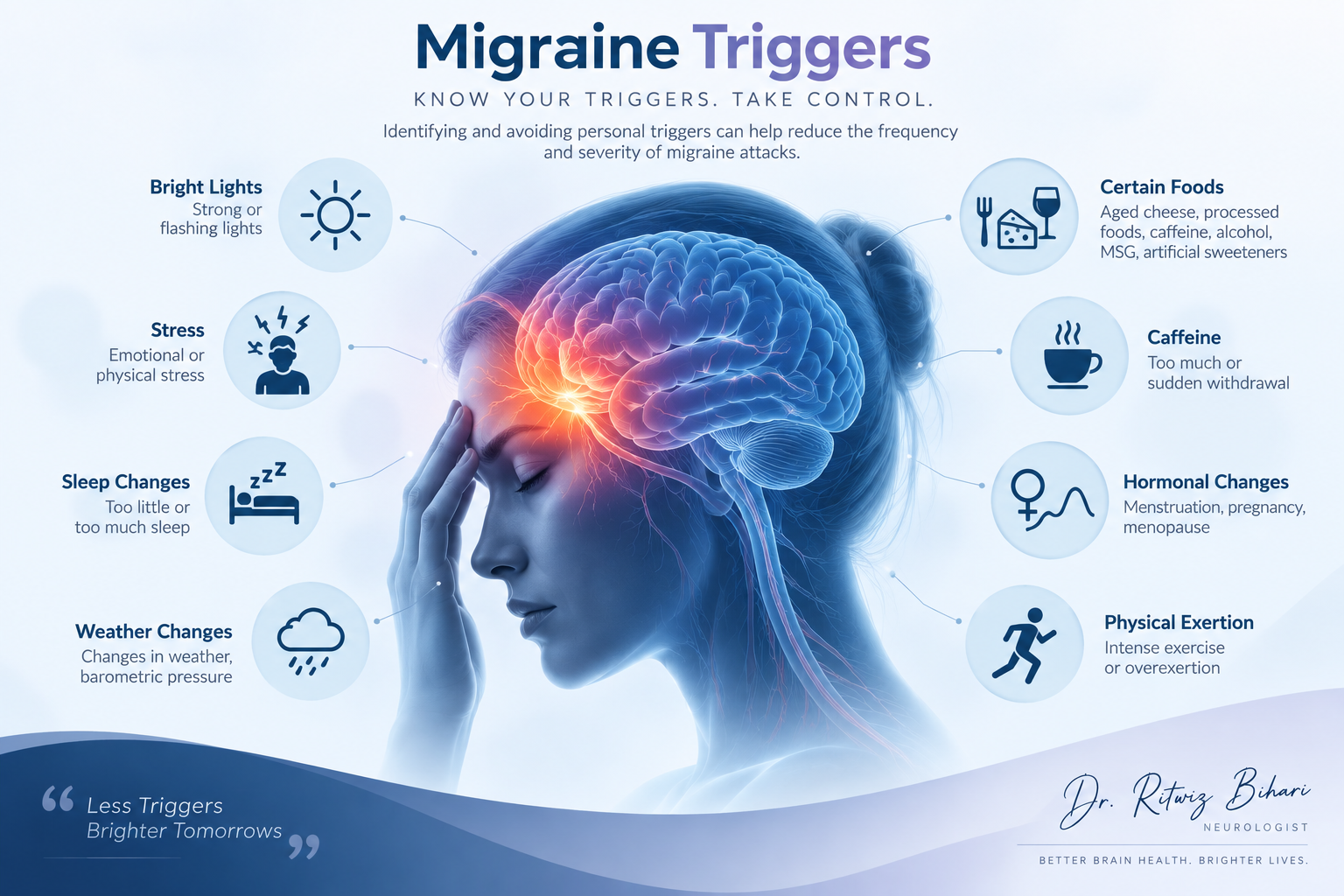
- Migraine is not 'just a bad headache' — it is a complex neurological disorder with identifiable triggers. The most common triggers include disrupted sleep, dehydration, skipped meals, bright light, strong smells, hormonal fluctuations, and chronic stress.
- Keeping a detailed migraine diary for 4–6 weeks is the single most powerful step a patient can take before their first neurology appointment — it reveals personal trigger patterns that are invisible without tracking.
- When lifestyle modifications are insufficient, preventive medications (like beta-blockers, anticonvulsants, or CGRP-targeted therapies) can reduce attack frequency by 50% or more — but they require a neurologist's prescription and careful monitoring.
Introduction: Why "Just Taking a Painkiller" Is Not Enough
One of the most common stories I hear from migraine patients at my Lucknow clinic is a familiar one: they have been suffering from intense, one-sided headaches for years, managing them with over-the-counter painkillers two or three times a week. They have never seen a specialist. They have simply accepted that this is their life.
This approach carries a hidden danger I must address directly: overusing painkillers for migraine — more than 10 to 15 days per month — actually causes a condition called Medication Overuse Headache, where the very drug meant to relieve pain begins to cause a chronic, daily headache. Breaking this cycle requires specialist care. More importantly, migraine is a highly preventable and treatable neurological condition when managed correctly. If you are seeing a headache and migraine specialist for the first time, know that a great deal can be done.
Understanding What Triggers a Migraine Attack
Think of your migraine threshold as a bucket. Every trigger adds water to the bucket. When the bucket overflows, an attack begins. The goal of trigger management is to keep the bucket as empty as possible. In my clinical experience, the most impactful triggers for patients in North India include:
1. Disrupted Sleep
This is the single most potent trigger I encounter. Both too little and too much sleep can precipitate an attack. Late nights on weekends, shift work, or insomnia are very frequently the culprit. The brain craves rhythmic consistency. I advise my patients to maintain the same wake time, seven days a week — yes, even on Sundays.
2. Skipped Meals and Dehydration
A drop in blood sugar from missing a meal is a potent migraine trigger. Similarly, even mild dehydration — particularly in Lucknow's hot summers — can rapidly lower your migraine threshold. I ask my patients to eat at regular intervals and target at least 2.5 to 3 litres of water daily.
3. Hormonal Fluctuations (Especially in Women)
Migraine is significantly more prevalent in women, and hormonal changes are a major reason. Many of my female patients notice attacks clustering predictably around their menstrual cycle — this is called menstrual migraine. The drop in estrogen before menstruation is the primary driver. Birth control pills can sometimes worsen this pattern. Perimenopause can also trigger a significant worsening of migraine frequency.
4. Bright Light, Loud Sounds, and Strong Smells
Sensory overstimulation is a consistent trigger. This includes harsh fluorescent lighting, smartphone screens in the dark, loud environments like wedding halls, the smell of strong perfume, or diesel fumes in heavy traffic. Many patients find that wearing polarized sunglasses outdoors significantly reduces trigger exposure.
5. Stress — and the "Let-Down" After Stress
Chronic stress is a well-known trigger, but I particularly want to highlight the "let-down" migraine: the attack that comes on a Friday evening or the first day of a holiday, after a stressful work period ends. The sudden drop in stress hormones can paradoxically trigger an attack. This is biologically predictable and very treatable.
6. Dietary Triggers (Individual, Not Universal)
Common dietary triggers include aged cheeses, red wine (due to tyramine and sulphites), processed meats, caffeine withdrawal, and chocolate. Importantly, these are not universal — what triggers one patient's migraine may not affect another at all. This is why a personal diary is far more valuable than any generic list.
The Migraine Diary: The Most Powerful Tool You Have
Before your first appointment with me, I strongly encourage you to maintain a migraine diary for 4 to 6 weeks. Note down:
- The date, time of onset, and duration of each attack.
- Pain severity on a scale of 1 to 10.
- Associated symptoms (nausea, vomiting, sensitivity to light or sound, visual aura).
- What you were doing in the 24 hours before the attack — sleep, meals, stress levels, screen time, what you ate and drank.
- What medications you took and how effective they were.
This diary often reveals personal patterns in a single month that the patient had never noticed over years of suffering. It is the most valuable document you can bring to your appointment.
When to Consider Preventive (Prophylactic) Medication
Lifestyle modification alone is highly effective for patients with infrequent attacks. However, I recommend considering preventive medication when:
- You experience four or more migraine attacks per month.
- Attacks last more than 48 to 72 hours despite acute treatment.
- The pain is severely disabling your work, family life, or daily functioning.
- You are using acute pain medications more than 10 days per month (Medication Overuse risk).
- You experience migraine with aura, which in certain situations requires additional clinical consideration.
Preventive treatments include beta-blockers (propranolol), certain antiepileptic medications (topiramate, valproate), tricyclic antidepressants, and more recently, CGRP-targeted monoclonal antibodies — a new class of highly effective, migraine-specific preventive therapy. These are not one-size-fits-all treatments; the right choice depends on your specific migraine pattern, other medical conditions, and lifestyle. This is precisely why specialist care matters.
Acute Treatment: What to Do During an Attack
When an attack begins, the key principle is to treat early. Waiting until the pain is at its peak significantly reduces the effectiveness of any medication. Specific migraine medications called triptans (like sumatriptan) are far more effective than standard painkillers for true migraine, but require a prescription and work best in the right patients.
During an attack, I advise patients to move to a quiet, darkened room, apply a cold compress to the forehead or neck, stay well hydrated, and take their prescribed medication at the very first sign of the attack — not hours later when the pain has already peaked. Do not continue working through a migraine hoping it will pass — early rest and medication consistently produce shorter, less severe attacks.
Living With Migraine: Long-Term Lifestyle Adjustments
Beyond individual triggers, there are broader lifestyle habits that substantially reduce the frequency and severity of migraine attacks over time. I counsel all my long-term migraine patients on the following:
- Regular Physical Exercise: Aerobic exercise three to five times a week has been shown in clinical trials to reduce migraine frequency comparably to some preventive medications. Exercise releases endorphins and reduces stress hormones — both beneficial for migraine management.
- Mindfulness and Stress Reduction: Cognitive Behavioural Therapy (CBT) and mindfulness-based stress reduction programs have robust evidence behind them for reducing migraine frequency in patients with high-stress lifestyles.
- Screen Hygiene: The rise of remote working has dramatically increased screen exposure. Blue-light filtering glasses and the 20-20-20 rule (every 20 minutes, look at something 20 feet away for 20 seconds) can make a measurable difference.
- Magnesium Supplementation: Magnesium deficiency is commonly found in migraine patients. A daily supplement of magnesium (400mg) has good clinical evidence for reducing attack frequency with minimal side effects and is something I often recommend as an add-on strategy.
Conclusion
Migraine does not have to control your life. With the right combination of trigger identification, lifestyle adjustments, and — where necessary — medically supervised preventive therapy, the vast majority of my patients achieve a dramatic reduction in the frequency and severity of their attacks. If you have been suffering in silence, or managing on painkillers alone, I strongly encourage you to book a dedicated migraine consultation. A targeted treatment plan changes lives — I see this in my clinic every week.