Stroke vs Heart Attack — Know the Difference
By Dr. Ritwiz Bihari
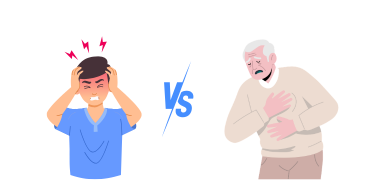
Strokes and heart attacks are both medical emergencies but affect different organs. Learn how to tell the difference and why rapid response is crucial. A stroke and a heart attack are both dire medical emergencies caused by a lack of blood flow. However, they affect entirely different essential organs and have very different symptoms. Understanding the difference can save a life.
Two Life-Threatening Emergencies
A stroke and a heart attack are both dire medical emergencies caused by a lack of blood flow. However, they affect entirely different essential organs and have very different symptoms. Understanding the difference can save a life.
What is a Heart Attack?
A heart attack occurs when blood flow to a part of the heart muscle is blocked, usually by a blood clot. Because the heart muscle is starved of oxygen, it begins to die.
- Chest Pain/Pressure: A crushing feeling or tightness in the center or left side of the chest.
- Radiating Pain: Discomfort spreading to the arm (usually left), back, neck, or jaw.
- Shortness of Breath: Often accompanying chest discomfort.
- Cold Sweat and Nausea.
What is a Brain Stroke (Brain Attack)?
A stroke happens when blood flow to a part of the brain is cut off (ischemic stroke), or when a blood vessel in the brain bursts (hemorrhagic stroke). Without oxygen, brain cells begin to die within minutes. As a leading brain stroke doctor in Lucknow, Dr. Ritwiz Bihari emphasizes the phrase "Time is Brain."
Signs of a Stroke: Remember F.A.S.T.
Unlike a heart attack, a stroke is primarily neurological. The symptoms reflect the brain's failure to control the body.
- Face Drooping: Does one side of the face droop or feel numb?
- Arm Weakness: Is one arm weak or paralyzed? Can the person raise both arms equally?
- Speech Difficulty: Is their speech slurred? Are they unable to speak or understand you?
- Time to call emergency: Call immediately if you see any of these signs.
Why the Difference Matters
Both conditions require an ambulance immediately. However, the treatment pathways are different. Heart attacks are treated by cardiologists, while strokes are managed by a stroke specialist.
If a stroke is suspected, the patient must be taken to a hospital equipped with a dedicated Stroke Unit and a stroke specialist in Lucknow who can administer thrombolytic ("clot-busting") therapy within the golden window of 4.5 hours.
Prevention is the Best Cure
Interestingly, heart attacks and strokes share many of the same risk factors: high blood pressure, high cholesterol, smoking, diabetes, and obesity. Managing these lifestyle factors with your physician can drastically reduce your risk for both a "brain attack" and a heart attack.
If you have concerns about your stroke risk, contact Om Neuro Clinic to schedule a comprehensive vascular and neurological assessment with Dr. Ritwiz Bihari.