Understanding Movement Disorders
By Dr. Ritwiz Bihari
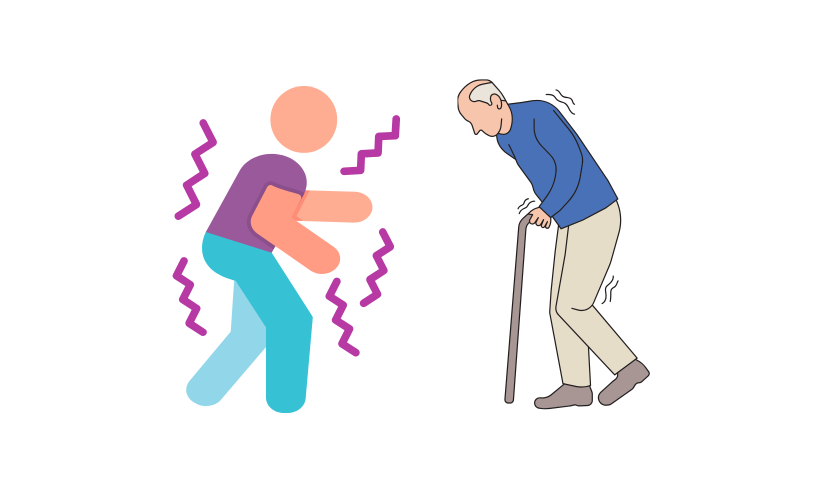
Learn about Parkinson's Disease and other movement disorders like essential tremor, blepharospasm, hemifacial spasm, and writer's cramp. Explore diagnosis, treatment, and care. Movement disorders affect motor control. Here are four examples:
What is Parkinson's Disease?
Parkinson's disease is a progressive neurological disorder that affects movement. It occurs when nerve cells in the brain, particularly those responsible for producing dopamine, become damaged or die. Dopamine is a neurotransmitter that plays a key role in controlling movement, so a decrease in dopamine levels leads to the characteristic symptoms of Parkinson's disease.
Symptoms of Parkinson's Disease:
- Tremors: Tremors, often starting in one hand, are one of the most recognizable symptoms. These tremors typically occur at rest and may worsen with stress or excitement.
- Bradykinesia: Slowness of movement making simple tasks difficult.
- Stiffness: Muscle rigidity reducing range of motion.
- Postural Instability: Balance issues and increased risk of falls.
- Other Symptoms: Speech changes, freezing, depression, anxiety, and cognitive impairment.
Diagnosis:
- Medical History: Symptom progression history.
- Neurological Examination: Movement and coordination assessment.
- Response to Medication: Improvement with dopaminergic drugs.
- Imaging Studies: MRI/CT to rule out other conditions.
Treatment:
- Medications: Levodopa and dopamine agonists.
- Physical Therapy: Improve mobility and balance.
- Speech Therapy: Help with speech and swallowing.
- Deep Brain Stimulation (DBS): Implanted electrodes regulate brain activity.
- Lifestyle Modifications: Exercise, diet, rest.
Care of Parkinson Patients:
- Educate Yourself: Understand the disease.
- Provide Emotional Support: Reassurance and empathy.
- Assist with Daily Activities: Help with daily tasks.
- Encourage Independence: Promote autonomy where possible.
- Promote Safety: Home modifications for safety.
Other Common Movement Disorders
Movement disorders affect motor control. Here are four examples:
1. Essential Tremor
- Diagnosis: Clinical evaluation.
- Treatment: Beta-blockers, anticonvulsants, DBS.
- Precautions: Avoid caffeine, stress; maintain healthy lifestyle.
2. Blepharospasm
- Diagnosis: Clinical and EMG tests.
- Treatment: Botox injections, meds, or surgery.
- Precautions: Avoid bright lights; manage stress.
3. Hemifacial Spasm
- Diagnosis: MRI, EMG, physical exam.
- Treatment: Botox, or decompression surgery.
- Precautions: Eye care and stress reduction.
4. Writer's Cramp
- Diagnosis: Neurological evaluation.
- Treatment: Occupational therapy, meds, Botox.
- Precautions: Breaks, posture correction, stretching.
Movement disorders can hinder daily functioning, but early diagnosis and proper care improve life quality. See a neurologist for evaluation.